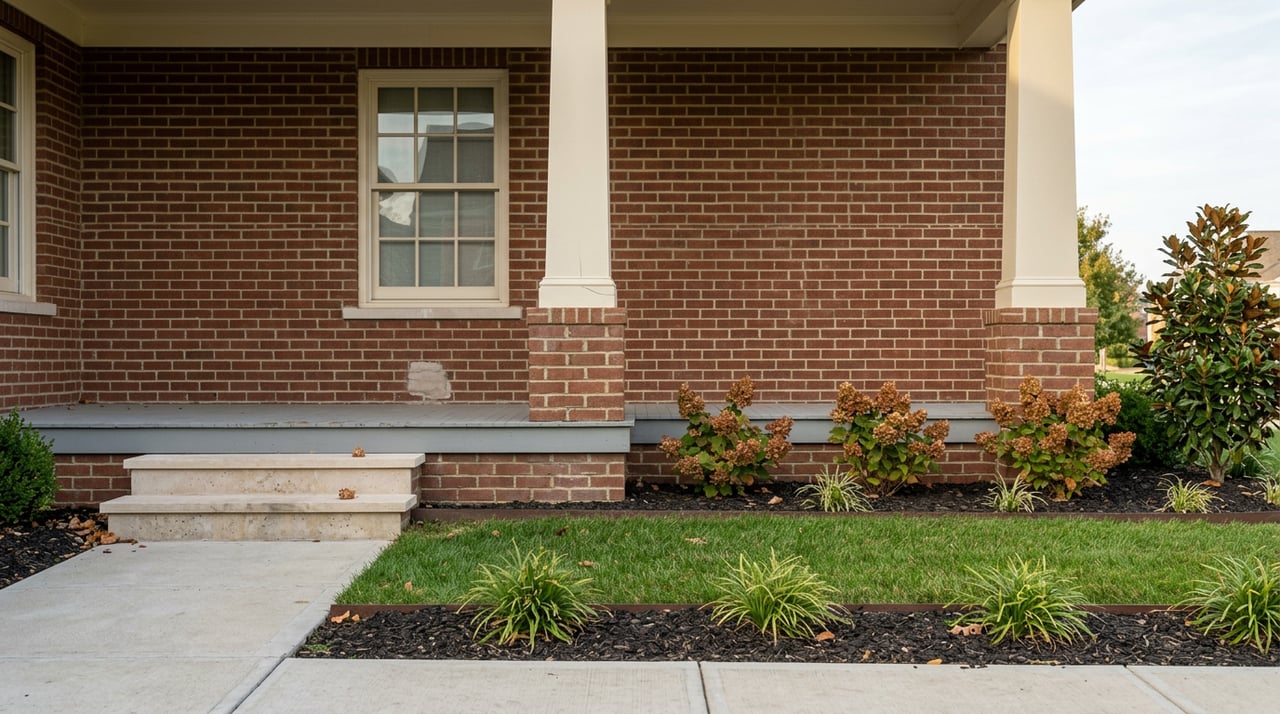
Selling an Older Home in Kingsport: Why the Neighborhood Matters More Than the Year Built
An inspection report on a Kingsport home rarely surprises the seller for the reason they expect. Buyers and their inspectors are not really testing the tax record's "year built." They are testing which decade of the city's growth actually poured the foundation, ran the wire, and set the pipe. In Kingsport those two things do not always match, and the mismatch shows up most in the neighborhoods that feel the oldest.
Colonial Heights is the clearest example. Ask most people in the Tri-Cities to name an established, old-Kingsport address and it comes up fast. But the housing stock tells a different story. Most of it dates to 1970 through 1999, with newer Craftsman-style construction still being added as recently as 2024, and only a modest share reaching back to the 1940s and 1950s. Some addresses in the area even sit in the county rather than the city, which is why you will see listings there advertise no city property tax as a selling point. A home that reads as vintage Kingsport can inspect like a mid-century-to-modern build, and a seller who assumes otherwise is preparing for the wrong report.
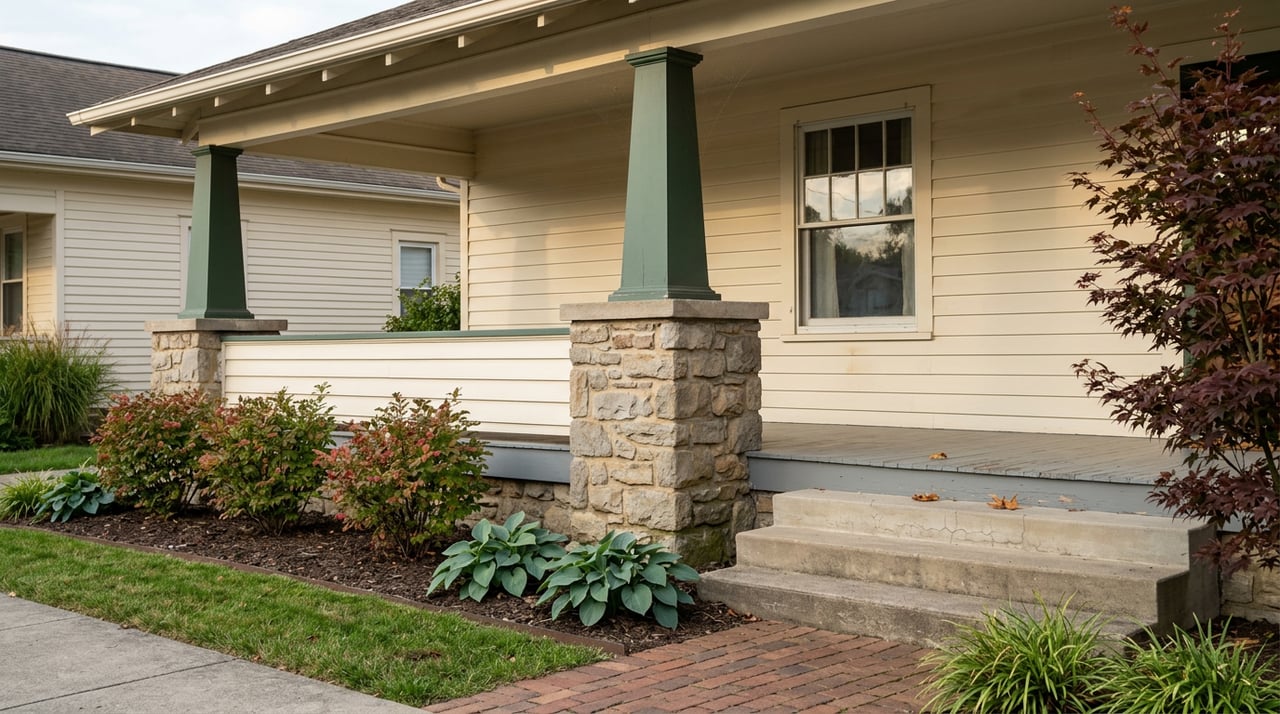
Kingsport did not grow the way most East Tennessee towns did. In 1917 the Kingsport Improvement Company, led by J. Fred Johnson, hired the Cambridge planning firm of John Nolen to lay out the city before most of it existed, dividing land into zones for homes, churches, industry, and commerce. The earliest residential blocks, built along Watauga Street and around Church Circle downtown, still carry English Cottage-style houses from that original plan.
Growth then moved outward in waves tied to the city's industrial expansion. Borden Village's housing stock traces to that same early-twentieth-century industrial buildout. Lynn Garden filled in with early-to-mid-1900s homes as the city expanded north. Colonial Heights, despite its name and reputation, mostly developed later, through the back half of the twentieth century, with construction continuing there today. Newer subdivisions on the outskirts, including Rock Springs and Allandale, are newer again.
That sequence matters because it means the systems inside a Kingsport house are more predictable by neighborhood than by year built alone.
| Area | Typical building era | What that means for an inspection |
|---|---|---|
| Downtown / Watauga Street / Church Circle | 1917 through 1930s | Original Model City-era wiring and plumbing, the oldest systems in the city |
| Borden Village | Early twentieth century | Housing tied to Kingsport's original industrial buildout |
| Lynn Garden | Early to mid-1900s | Pre-1950s wiring and pipe common |
| Colonial Heights | Mostly 1940s to 1990s, with new construction through 2024 | Mid-century to modern systems, some sections built this decade |
| Rock Springs / Allandale | More recent development | Newer construction, fewer legacy-systems flags |
Homes from the original 1917 through 1930s plan and from Lynn Garden's early build-out are the ones most likely to carry knob-and-tube wiring or the cloth-covered nonmetallic cable that followed it. Knob-and-tube is not automatically illegal to leave in place, and there is no blanket rule forcing replacement, but it lacks a grounding conductor and it draws attention the moment a buyer's inspector sees it, because both financing and insurance can get complicated around it.
Homes built roughly between 1965 and 1975, a range that overlaps with parts of Colonial Heights and other mid-century Kingsport construction, are more likely to carry aluminum branch wiring, which needs an approved retrofit at the connections to be considered safe. Older homes across the city, regardless of exact decade, tend to carry galvanized or lead supply piping once they pass the half-century mark, and local plumbing contractors report whole-home repiping projects in Kingsport typically run in the range of $4,500 to $12,000 depending on home size and pipe material, with most jobs completed in three to seven days.
Kingsport's geography adds its own layer. The hilly terrain and clay-loam soil across Sullivan County, combined with roughly 44 inches of annual rainfall, put real pressure on crawlspaces and foundations, so moisture and settlement findings show up in inspection reports independent of the wiring conversation entirely.
Tennessee's disclosure law asks what a seller already knows, not what a hired inspector would eventually find.
The Tennessee Residential Property Disclosure Act requires sellers of one-to-four-unit residential property to give buyers either a completed disclosure statement or, if the buyer agrees to waive it, a disclaimer statement instead. The obligation is built around the seller's actual knowledge. There is no requirement to hire an inspector, run tests, or investigate the home before filling out the form. A material defect, in practice, is a known issue serious enough to affect either the home's value or someone's safety, and once a seller knows about one, it needs to go on the form.
Homes built before 1978 carry a separate, federal layer on top of the state form: the Residential Lead-Based Paint Hazard Reduction Act requires sellers to provide the EPA's lead-hazard information pamphlet before the sale closes, regardless of whether the seller believes lead paint is present.
A narrow set of transfers are exempt from the state disclosure form itself under Tenn. Code Ann. § 66-5-209:
An exemption removes the requirement to fill out the standard form. It does not remove the duty to avoid actively misleading a buyer about something the seller knows is wrong, and it does nothing to touch the federal lead-paint pamphlet requirement for a pre-1978 home. None of this is a substitute for legal advice specific to your situation, and any Kingsport seller working through an exemption, an inherited property, or a disclosure question with real legal weight should talk to a real estate attorney before signing anything.
Kingsport's own numbers show why getting ahead of this matters. As of August 2026, homes listed in Kingsport were spending a median of 63 to 64 days on the market before going under contract, with a median list price sitting around $289,000. Two months of active exposure is plenty of time for a buyer's inspection contingency, typically the first two weeks after an accepted offer, to surface an era-specific systems issue and put the deal back on the negotiating table.
A seller who already knows what an inspector is likely to flag in their specific neighborhood walks into that conversation prepared instead of reactive, which is often the difference between a credit at closing and a deal that falls apart at day 45.
Do I have to replace knob-and-tube wiring before I sell in Kingsport? No single rule forces it. But insurers in many markets restrict coverage or add surcharges for homes with active knob-and-tube, and buyers treat it as a red flag the moment it shows up in a report, so addressing it before listing often prevents a harder conversation later.
Does Tennessee require a home inspection before I list? No. The state's disclosure requirement is based on what you already know, not on hiring someone to go find problems. A pre-listing inspection is a choice, and for older Kingsport housing stock it is often a smart one.
What if I inherited a house I've never lived in? If you have not personally resided in the property at any point in the past three years, you may qualify for the disclosure exemption under Tenn. Code Ann. § 66-5-209. That exemption removes the form requirement, not the duty to be honest about anything you actually know is wrong with the house.
If you're weighing whether to list an older Kingsport home this year, or you just want a clearer read on what your specific neighborhood and decade are likely to bring up during inspection, Alexis P Greene can walk through it with you street by street. Start with a free home valuation and a straight answer about what to expect before a buyer's inspector ever sets foot in the crawlspace.
Whether you’re buying your first home, selling a lakefront property, or planning your next investment, Alexis is committed to helping you move forward with confidence. She listens first, advises honestly, and advocates fiercely for your best interests.
5205 Bobby Hicks Hwy Ste 10 Johnson City, TN 37615