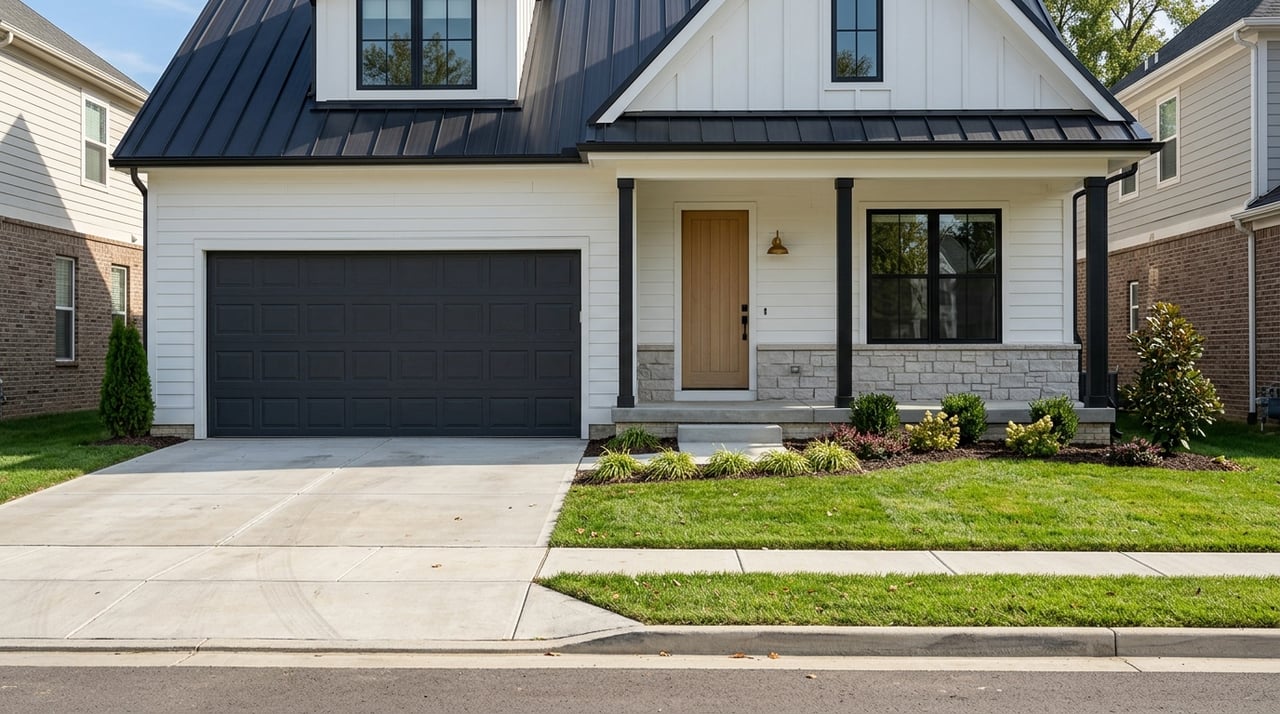
A Guide to Newer Jonesborough TN Subdivisions
If you are drawn to Jonesborough but want something newer than the historic core, you are not alone. Many buyers love the town’s charm yet also want modern floor plans, attached garages, and a layout that feels easier to maintain day to day. This guide will help you understand where newer neighborhoods and subdivisions are showing up in Jonesborough, what types of homes you can expect, and how to compare your options with more confidence. Let’s dive in.
Most of Jonesborough’s newer housing is found in planned subdivision pockets within the town’s planning region, which generally aligns with the Urban Growth Boundary. That matters because newer communities here are usually shaped by town review standards for plats, streets, sidewalks, utilities, setbacks, and landscaping.
In practical terms, that means newer neighborhoods often feel different from the historic downtown street pattern. The town’s subdivision approach favors layouts that help reduce speeding and improve neighborhood safety, so you will often see more suburban street design and traffic-calmed streets in these newer areas.
Newer Jonesborough subdivisions are often designed around the land itself. Recent planned residential development examples show flexible lot sizes, varying setbacks, common space, loop streets, internal connections, and sidewalk or trail alternatives.
That flexibility helps builders work with terrain and drainage instead of forcing a rigid grid. For you as a buyer, that can mean a neighborhood that feels more curved, connected, and site-specific than older parts of town.
One of the biggest surprises for buyers is that newer housing in Jonesborough is not all the same. You can find attached townhomes, detached single-family homes, clustered layouts, and larger-lot communities depending on where you look.
That range gives you more flexibility if you are trying to match your home search to your budget, commute, or maintenance preferences. It also means the phrase “new construction in Jonesborough” can describe very different living experiences.
Saylor’s Place is one of the clearest examples at the more accessible end of the newer-home market. It is a D.R. Horton townhome community with 97 homesites and two-story plans ranging from about 1,381 to 1,544 square feet.
Current builder information shows the Mitchell plan starting at $243,990, with 3 to 4 bedrooms, 2.5 baths, and about 1,554 square feet. If you want a newer home with a smaller footprint and potentially less exterior upkeep than a larger detached property, this is the kind of community worth watching.
Chapman’s Reserve offers a different option. It is described as a pre-selling community with 20 homesites and one- and two-story single-family floor plans.
Current floor plans range from roughly 1,615 to 2,703 square feet, with several plans listed around $400,000. For buyers who want newer finishes and more room than a townhome, but do not necessarily want the larger-lot price point, this kind of community can sit in the middle of the market.
At the larger-lot end, Hairetown Estates stands out. Available information points to detached homes from about 1,877 to 2,779 square feet, and market snapshots describe homesites of roughly half an acre and larger.
That makes it a useful example if you want a newer home but also value more separation between homes or extra outdoor space. Current snapshots also show lots marketed separately in the mid-$80,000s to low-$90,000s and buildable plans at $525,000 and up, though pricing and availability can change quickly.
Mill Creek shows another side of Jonesborough’s newer-home market. Orth Homes currently markets one-story slab plans there ranging from about 1,248 to 1,904 square feet.
That is important because it shows newer subdivisions here are not all large or luxury-oriented. If you are looking for a manageable one-level layout, Mill Creek helps round out the picture of what newer construction can look like in Jonesborough.
Lot patterns in Jonesborough’s newer neighborhoods are not uniform. On one end, you have compact townhome communities like Saylor’s Place. On the other, you have larger-lot communities like Hairetown Estates.
Between those two ends, planned residential development layouts can cluster homes, vary lot widths and lengths, and create more flexible neighborhood designs. For buyers, that means it is smart to compare not just the home itself, but also the lot shape, street pattern, and how the neighborhood uses common space.
Town subdivision rules require residential lots to meet minimum area and width standards and to be buildable without a variance. While that may sound technical, it is actually helpful to know.
It means newer subdivision lots are expected to work as intended under town rules. That can add predictability when you are comparing a newer planned neighborhood to a more irregular lot elsewhere.
In Jonesborough’s newer neighborhoods, amenity value often comes from nearby public parks and trail connections rather than a private clubhouse model. That is a key difference if you are moving from an area where most new subdivisions are built around internal amenities.
Instead, many newer neighborhoods benefit from the town’s broader parks and recreation network. Depending on the location, that can be a real quality-of-life advantage.
The Meadows and Mill Creek area is especially notable for connectivity. The town says the Lost State Scenic Walkway runs from downtown’s Mill Spring Park to Golden Oak Park within the Meadows and Mill Creek subdivisions.
That gives this area one of the strongest trail links to the historic center. If you like the idea of newer housing with a more direct connection to downtown Jonesborough’s public spaces, this is one area to keep on your radar.
Jonesborough also offers larger public recreation assets that support everyday living. Persimmon Ridge Park includes biking and hiking trails, ballfields, a playground, a water park, and an 18-hole disc golf course.
The planned First Frontier Trail is intended to connect downtown Jonesborough, multiple town parks, Johnson City’s sidewalks and parks, ETSU, the Tweetsie Trail, and Sycamore Shoals State Historic Park. For buyers who want a newer home without giving up outdoor access, these public amenities add meaningful value.
For many buyers, commute patterns shape the search as much as square footage or finishes. In Jonesborough, newer subdivisions tend to be more road-oriented than the historic core.
Current listing directions for places like Saylor’s Place and Hairetown Estates point back to the I-26 Boones Creek approach. That makes many of these neighborhoods appealing if your routine involves regional driving rather than staying close to downtown every day.
If you are relocating to the Tri-Cities, this distinction is especially useful. A home can still be in Jonesborough while functioning very differently depending on whether it is tied more closely to interstate access or to the downtown street network.
That is why it helps to think beyond the mailing address. You want to understand how the neighborhood fits your real-life patterns, including work, errands, and how often you want to be in the historic center.
Jonesborough’s historic core centers on Boone and Main Streets and includes much of downtown’s Historic District. Exterior changes in historic zones are subject to Historic Zoning Commission approval, including items such as paint color, re-roofing, storm windows, storm doors, lighting, and additions.
That review structure helps preserve the character of downtown, but it also creates a different ownership experience than what you will usually find in newer subdivisions. For some buyers, that preserved character is the whole appeal. For others, a newer neighborhood feels simpler and more predictable.
In general, newer subdivisions are often a better match if you want updated layouts, garages, and more predictable maintenance expectations. This is based on the current housing mix and town preservation rules, not a formal town policy.
If your priority is ease, newer materials, and a more suburban street pattern, newer neighborhoods may feel like the better fit. That can be especially true for first-time buyers, busy professionals, or anyone buying from out of state.
The historic core often appeals more to buyers who prioritize walkability, preserved character, and direct access to downtown amenities. Again, that is an inference from the housing mix and preservation framework rather than an official classification.
The best choice depends on what matters most to you. Some buyers want the storybook feel of downtown Jonesborough, while others want a newer home with a more conventional subdivision layout.
If you are narrowing down newer neighborhoods in Jonesborough, it helps to compare them through a few clear filters instead of trying to keep every detail in your head. Focus on home type, price point, lot style, trail or park access, and commute pattern.
Here is a quick snapshot based on current market and builder information:
| Community | Home Type | Approx. Size Range | Current Price Snapshot | Notable Feature |
|---|---|---|---|---|
| Saylor’s Place | Townhomes | 1,381 to 1,544 sq. ft. | Starts around $243,990 | Lower-entry newer option |
| Chapman’s Reserve | Single-family | 1,615 to 2,703 sq. ft. | Several plans around $400,000 | Smaller pre-selling community |
| Hairetown Estates | Detached homes and lots | 1,877 to 2,779 sq. ft. | Builds at $525,000+; lots mid-$80Ks to low-$90Ks | Larger homesites |
| Mill Creek | One-story detached homes | 1,248 to 1,904 sq. ft. | Builder pricing varies | Strong trail connection area |
Because many of these communities are presale or builder-controlled, inventory and pricing can move quickly. If you are serious about one area, it helps to verify current availability before you build your whole search around a specific plan or homesite.
Before you visit newer neighborhoods in Jonesborough, think about what matters most in your day-to-day life. New construction can look similar online, but the feel of each area can differ quite a bit once you factor in roads, lot sizes, and access to parks or downtown.
A few practical questions can help you compare options:
When you answer those questions first, your search becomes much clearer. You stop chasing every new listing and start focusing on the communities that actually fit how you live.
If you want help sorting through Jonesborough’s newer neighborhoods, comparing builder options, or figuring out which area best matches your commute and budget, reach out to Alexis P Greene. You will get clear guidance, local insight, and a smoother path from search to closing.
Whether you’re buying your first home, selling a lakefront property, or planning your next investment, Alexis is committed to helping you move forward with confidence. She listens first, advises honestly, and advocates fiercely for your best interests.
5205 Bobby Hicks Hwy Ste 10 Johnson City, TN 37615