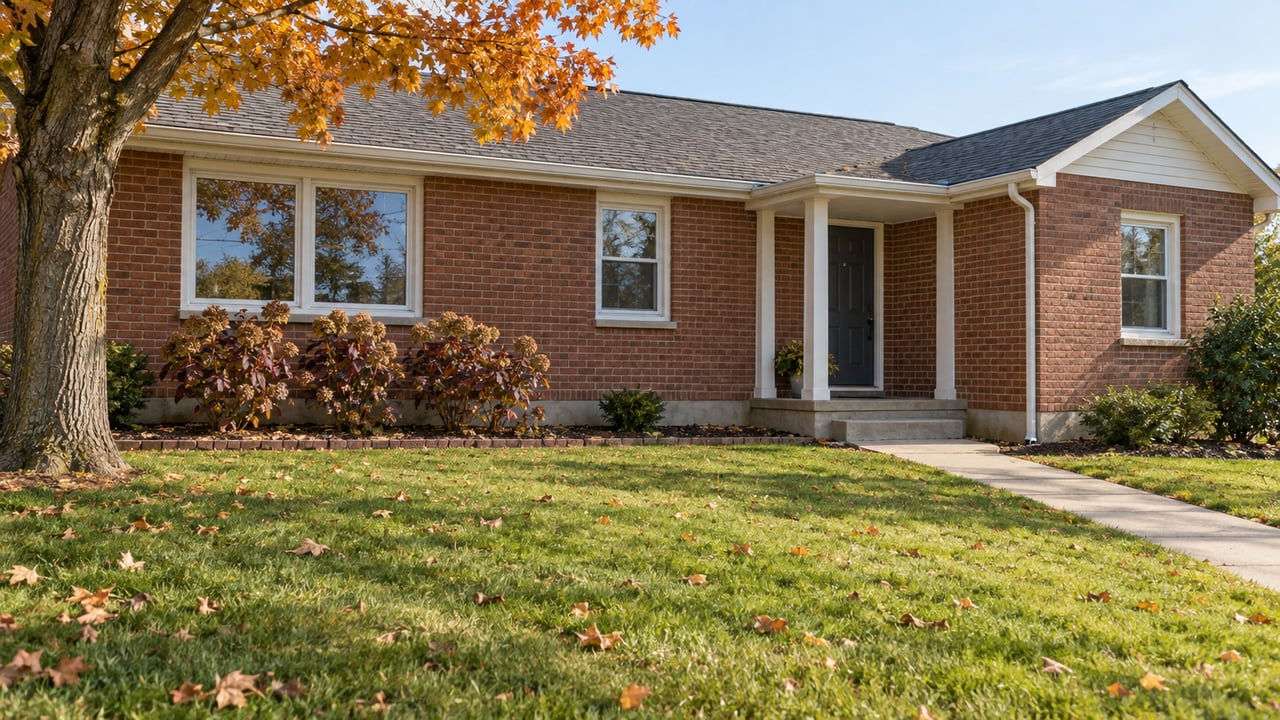
Elizabethton Cut Its Property Tax Rate Nearly in Half. Your Bill Follows a Different Number.
If an Elizabethton listing shows last year's property tax bill, what is that figure actually built on?
Two things, and neither one is in effect anymore. The 2025 bill multiplied an appraisal from Carter County's previous reappraisal by tax rates that both the city and the county have since replaced. A buyer reading that line in October 2026 is looking at a number from a system that ended this summer. A seller quoting it is giving out stale information without realizing it.
For anyone buying or selling inside city limits this fall, the useful question is how far that particular home's appraisal moved compared with everyone else's. The rate change alone doesn't answer it.
Carter County finished its first reappraisal since 2021 this year. The Elizabethton Star reported that many property assessments came back nearly doubled. Then both local governments cut their rates by almost exactly the same proportion.
| Tax rate per $100 of assessed value | FY2025-26 | FY2026-27 |
|---|---|---|
| City of Elizabethton | $1.74 | $0.93 |
| Carter County | $2.18 | $1.1571 |
| Combined, inside city limits | $3.92 | $2.0871 |
The Carter County Commission adopted its new rate in a 16-2 vote on June 29. On July 9, Elizabethton City Council unanimously set the city rate at 93 cents, after waiting for property owners' assessment appeals to finish. The Star's July article listed the old city rate as $1.57. The city's own FY2025-26 budget notice and Johnson City Press both put it at $1.74. So $1.74 is the right baseline. An undated $1.57 figure still shows up on the city's rates page, so don't be surprised if you run into it.
The cuts match because they come from the same formula. Tennessee's certified tax rate law, which the Tennessee Comptroller calls "truth-in-taxation," is designed so that total taxes collected stay the same after a reappraisal, even if overall property values rise. A city or county that wants to collect more than that has to hold a public hearing before adopting a higher rate.
WJHL reported that Carter County's total assessment base rose from $1.14 billion to $2.15 billion, an 88.4% increase. Elizabethton's base rose 87%. In the same story, County Commissioner Aaron Frazier said local governments are "not allowed to get a windfall," however much values climb.
The Comptroller's explanation shows who comes out ahead and who doesn't:
"If a property's value increased as the result of the revaluation more than the average, the taxes may be somewhat higher, while if the value increased less than the average, the tax bill may actually be lower in a revaluation year compared to the year before."
So the rate cut is set by the average. Your own bill depends on where your home falls compared with that average.
Here's the arithmetic for a home inside city limits, which pays both the city and county rates. Residential property in Tennessee is taxed on 25% of its appraised value. The combined rate fell from $3.92 to $2.0871. That means a city home's appraisal had to rise about 88% for its combined bill to stay flat. A county-only home outside the city has almost the same break-even point, about 88.4%.
To show how this plays out, here are three hypothetical city homes, each appraised at $200,000 before the reappraisal:
| 2026 appraisal change | New appraisal | 2025 combined bill | 2026 combined bill |
|---|---|---|---|
| Up 60% | $320,000 | $1,960 | about $1,670 |
| Up 88% | $376,000 | $1,960 | about $1,962 |
| Up 120% | $440,000 | $1,960 | about $2,296 |
These are examples only, not real parcels. They use the published rates and the 25% assessment ratio. All three homes "went up in value." One bill fell by about $290, one stayed flat, and one rose by about $336.
WJHL's reporting matches the middle row. Vicky Manuel's Elizabethton home was appraised 88.2% higher than it had been five years earlier. That was close enough to the 88.4% countywide increase that her county bill came out almost exactly where it was in 2025. In an earlier WJHL story, another Carter County owner said his figure went from $117,000 to $213,000. That's roughly an 82% increase, which looks alarming but is actually slightly below the average. Under the Comptroller's rule, a below-average increase points to a slightly lower bill.
Frazier summed it up for WJHL: "Some people will see their taxes go down. Some will see it go up. It may change a little bit but it's not gonna change a lot." WJHL added that most property owners saw increases fairly close to the overall 88%.
The appeals are another sign that the ratio matters more than the raw jump. Many owners asked for Carter County Board of Equalization hearings before the new rates were known. Assessor Shane Simerly told Johnson City Press that once owners learned the certified rate was nearly half the old one, "We have had a lot of missed appointments and cancellations since then." He said the adjustments made for owners who did go before the board were "very small."
Simerly also explained to WJHL that the new appraisals were based on sales recorded with the Register of Deeds in 2025. He said anyone can call or visit his office to go over their property record card with him or a deputy. Speaking to WCYB, he said the long gap between reappraisals added to the sticker shock.
So the 2026 numbers reflect what homes sold for in 2025, and the size of the jump is partly a catch-up from five years without a reappraisal.
The Comptroller's schedule lists Carter County's next reappraisal for 2030, on a four-year cycle. In Tennessee, the value set in a reappraisal year usually stays the same until the next one. A Tennessee assessor's FAQ, published by Coffee County, says it changes only through an appeal or a physical change to the property, such as adding or removing a building or land. Ownership records and assessments reflect each property as of January 1 of the tax year.
That has a practical effect for both sides of a sale.
For buyers, the 2026 appraisal on a given home is the figure that will likely drive its taxes for the next several years. You can look it up yourself in the Comptroller's Tennessee Property Assessment Data search for Carter County, which lets you search by address, owner name, or parcel ID. Multiply 25% of that appraisal by $2.0871 per $100 for a home inside the city, or by $1.1571 for a county-only home. The result is a much better estimate than any 2025 figure on a listing sheet.
For sellers, your 2026 bill is now the number to share. If your appraisal rose less than the average, that bill may be lower than last year's, which is worth putting in front of buyers. If it rose more, buyers who check the parcel lookup will see the current figure anyway.
Timing matters this month too. Under the Comptroller's assessment schedule, current-year taxes become due and payable on the first Monday in October, which was October 5 this year. The preceding year's taxes can be paid without interest through February 28 and become delinquent March 1. The city has used its own deadline in the past. Its notice for 2024 taxes set delinquency at April 1, 2025, and told recent buyers of property inside city limits to check whether those taxes had been paid. So anyone closing this fall or winter should confirm both the city and county 2026 bills.
Did Elizabethton raise property taxes in 2026? The city and county each adopted the state-certified rate, which is designed to bring in the same total revenue as the year before. Whether an individual bill went up depends on how that home's appraisal moved compared with the average.
Why did my appraisal nearly double if prices didn't? Simerly told WCYB that the long gap since the last reappraisal contributed to the large jump, and the new values are based on 2025 sales.
Can a 2026 appraisal still change? Generally only through an appeal or a physical change to the property until the next reappraisal in 2030. Check the specifics with the Carter County Assessor of Property.
This post is general information, not legal, tax, or financial advice. Please confirm your own situation with the assessor's office, the Carter County Trustee, or a tax professional.
If you're thinking about selling in Elizabethton, or you're comparing homes there with other Tri-Cities towns, our team can pull each property's 2026 appraisal and work out a current tax estimate before you price your home or write an offer. Alexis P Greene will walk you through those numbers, and you can start with a free home valuation.
Whether you’re buying your first home, selling a lakefront property, or planning your next investment, Alexis is committed to helping you move forward with confidence. She listens first, advises honestly, and advocates fiercely for your best interests.
5205 Bobby Hicks Hwy Ste 10 Johnson City, TN 37615